Since Sir Alex Ferguson retired in 2013, Manchester United have spent years trying to find a route back towards the summit of English football.
Managers have come and gone, recruitment policies have changed, senior executives have been replaced, and huge sums have been spent reshaping the squad.
Yet their opening Premier League defeat at Hull City prompted a simple question – how much has really changed?
A glance at the team Michael Carrick selected revealed some distinctly familiar names.
Luke Shaw started in defence, more than 12 years after arriving from Southampton. His fitness and availability were being publicly questioned as far back as José Mourinho’s time as manager, yet more than eight years after the Portuguese left Old Trafford, United are still relying upon him.
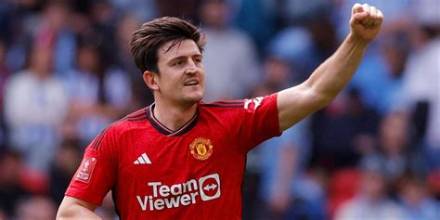
Alongside Shaw was Harry Maguire, who joined from Leicester City for £80 million in 2019. He became captain, subsequently lost the armband, and has repeatedly been linked with moves away. At various stages his United career appeared close to ending. Seven years after his arrival, however, he remains part of the team.
Perhaps even more revealing was Carrick’s response when United fell 2–0 behind.
He turned to Marcus Rashford.
Rashford made his first-team debut in February 2016 and will be 29 in October. He has spent spells away from Old Trafford on loan with Aston Villa and Barcelona and had appeared destined to leave permanently.
Instead, United were unable to find a buyer prepared to complete a transfer, and Rashford was reintegrated into Carrick’s squad. When United needed somebody to change the game at Hull, it was Rashford whom Carrick called upon.
There is nothing wrong with experienced players remaining useful. The wider concern is what the continued importance of Shaw, Maguire, and Rashford says about everything United have attempted to build around them.
All three have, at different stages, appeared likely to become part of United’s past. Yet there they were again at Hull.
During the same period, United have spent enormous sums supposedly constructing teams capable of taking the club into a new era. Players have arrived for substantial fees, been presented as important parts of the latest project and, in numerous cases, departed without establishing themselves.
That creates an uncomfortable contradiction.
If the rebuilding process has worked, why are players associated with previous unsuccessful versions of United still being asked to perform such important roles?
The issue should not be directed at Shaw, Maguire, or Rashford. If selected, their responsibility is simply to perform.
The questions belong elsewhere.
Carrick oversaw an impressive improvement last season, guiding United to third place and back into the Champions League. Younger players have been introduced, and one defeat at Hull does not erase that progress.
But progress and transformation are not necessarily the same thing.
Eventually, a successful rebuild should produce a new core. The players recruited during that process should become those carrying the responsibility when matches become difficult.
At Hull, however, United’s response to adversity looked distinctly familiar.
After years of enormous expenditure and repeated promises of renewal, supporters are entitled to wonder how far their club has actually travelled.