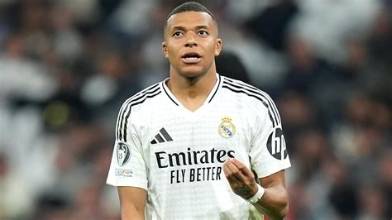
A casual joke by Kylian Mbappé has proved very expensive.
It has cost the player lucrative Chinese sponsorship deals, prompted apologies from Real Madrid and La Liga, and disrupted broadcasts of Spanish football in China. It has also illustrated how football’s international ambitions can sometimes be at odds with political sensitivities.
The controversy began with a video interview in which Mbappé discussed an image showing his face superimposed onto that of Mao Zedong, with such memes supposedly mocking the influence that the French captain exercises over his teammates and clubs.
He described the figure as a Chinese dictator without naming him.
Mao founded the People’s Republic of China in 1949 and remained its leader until his death in 1976. His rule involved repression and ill-judged domestic policies that caused millions of deaths, but his image retains considerable political significance in China, where jokes about senior leaders face strict censorship.
The commercial response was swift. Beverage company Dongpeng, dairy group Mengniu, and cheesemaker Milkground terminated their agreements with Mbappé. China Media Group, which oversees state broadcaster CCTV, suspended coverage of La Liga and other matches involving the forward. His accounts on Chinese social media platforms also faced restrictions.
Mbappé was quick to apologise in French, Chinese, and English, accepting that his comments had caused offence. Real Madrid followed suit, stressing the club’s respect for China and its supporters. Meanwhile, Javier Tebas, La Liga president, established a crisis unit and met with China’s ambassador to Spain, Yao Jing.
Currently streaming platform Migu is scheduled to show nine of this weekend’s ten La Liga fixtures. The exception is Real Madrid’s match at Racing de Santander.
Nevertheless, the implications extend beyond one player’s endorsements. Clubs seek overseas audiences because they attract sponsors, merchandise sales, and broadcasting income. Those relationships also create vulnerabilities when commercial partners operate within political systems that restrict public expression.
There is a question of proportionality. Mbappé was discussing a joke about his own reputation rather than delivering a considered political statement, and he almost certainly did not appreciate what was at stake.
Yet the consequences have reached clubs, broadcasters, and supporters with no involvement in the interview.
For Spanish football, the immediate priority is repairing those relationships. The broader question is how much freedom players and clubs are prepared to surrender to preserve access to a lucrative market.
Clubs already invest a lot of money and time in media training for their top stars. But this latest episode suggests that more might be needed.